

Share this with your friends & families
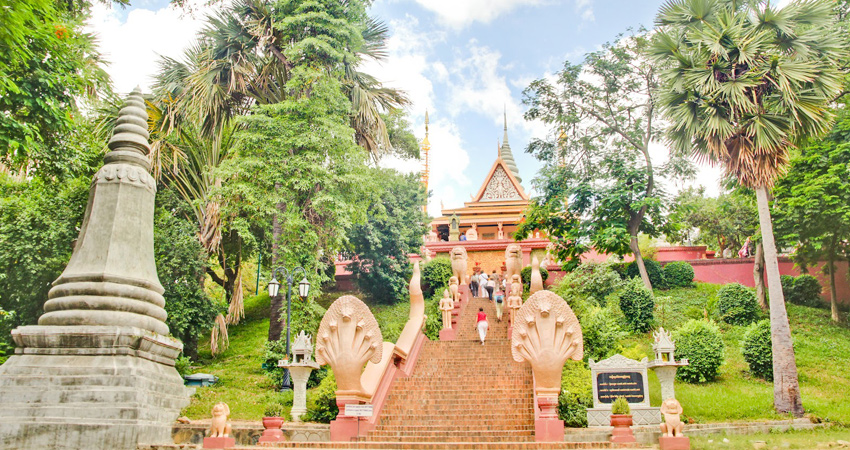
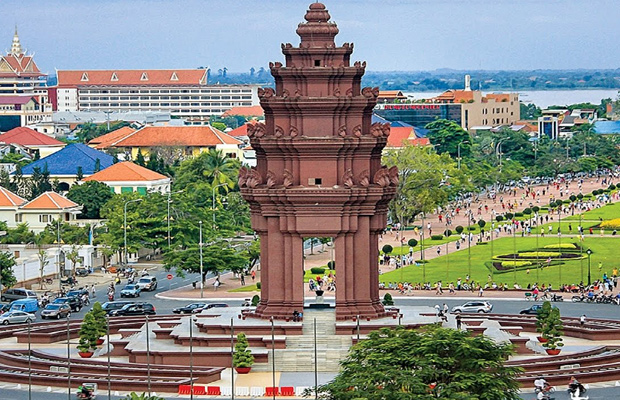
Wat Phnom, Phnom Penh the namesake and symbol of the capital city of Phnom Penh, sets prominently atop an artificial 88.5 ft (27 meter) hill (or 'Phnom') near the Tonle Sap River in the northeast section of the city. Legend relates that Daun (Grandmother or Lady) Penh, a wealthy widow, found a large koki tree in the river. She hoped to use it for a house, but inside a hollow of the tree she found four bronze statues of the Buddha (and possibly a stone statue of Vishnu); she erected a small shrine on the site to protect them. Eventually this became a sacred site and sanctuary where people would make wishes and pray for good luck and for success in school or business. Another account of the founding of the wat suggests King Ponhea Yat (r. 1405-67), built the sanctuary (vihara or vihear) when he moved his capital from Angkor to Phnom Penh in 1422. The prominent stupa immediately west of the sanctuary, or vihara (vihear) contains the ashes of the king.
- Phnom Penh
- 1Day
Wat Phnom, Phnom Penh the namesake and symbol of the capital city of Phnom Penh, sets prominently atop an artificial 88.5 ft (27 meter) hill (or 'Phnom') near the Tonle Sap River in the northeast section of the city.
Other Travelstyle
- Small Group Tours (Siem Reap, Phnom Penh, Sihanoukville)
- Private Day Tours (Siem Reap, Phnom Penh, Sihanoukville)
- Multi-Day Tours
- Angkor National Park Tickets
- Transports and Transfer
- Angkor Excursions
- Siem Reap to Phnom Penh
- Battambang Excursions
- Phnom Penh Excursions
- From Phnom Penh
- Cambodia Tickets
Phnom Penh Hotels
Phnom Penh Tours
- Wonderful Cambodia Explorer 21Days-20Nights
- Phom Penh to Kampot-Kep By Private Car or Minivan
- Phnom Penh to Siem Reap by Private Car or Minivan
- Amazing Cambodia 14Days - 13Nights
- Best of Phnom Penh tour 2Days
- Phnom Penh National Museum, Royal Palace & Silver Pagoda Tours
- Phnom Penh to Siem Reap by Private Helicopter
- Complete Cambodia Explorer 28Days-27Nights
- Phnom Penh In Details
- Kirirom National Park Private Day Tour from Phnom Penh
- Seaside Holidays 7Days-6Nights
- Beautifull Cambodia Explorer 21Days - 20Nights

.jpg)